
The 4:1 advantage: why empty returns are mining’s hidden cost
In mining logistics, the loaded leg is optimized.
The empty return is usually ignored.
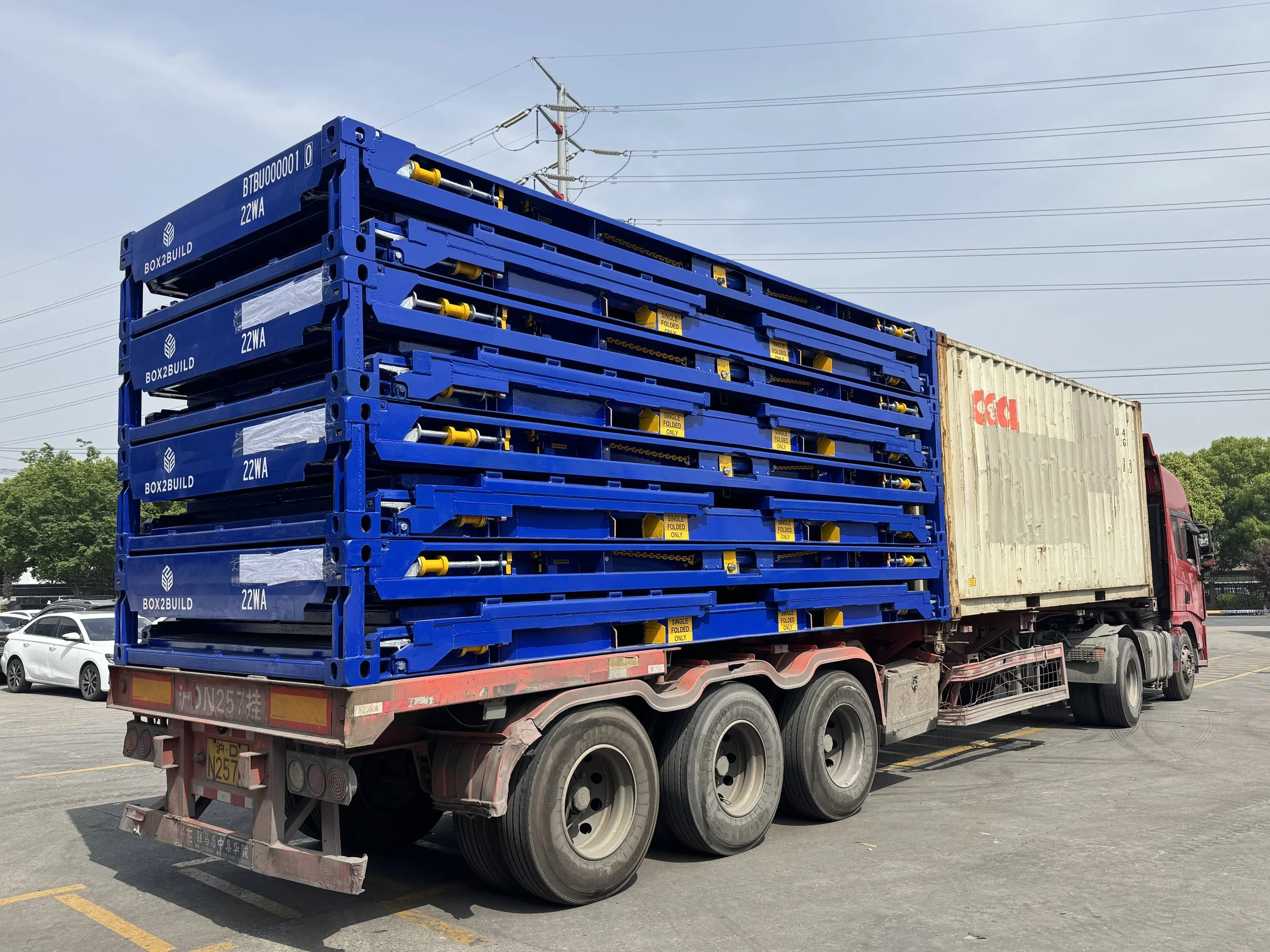
Trucking of 4 folded FOX containers, and one standard shipping container
Yet after every delivery to the port, trucks drive back carrying only air. You still pay for fuel, drivers, tolls and time.
That is pure cost.
Example: 450 km inland mine to port
Assumptions:
Repositioning cost = $1.30 per km
Distance = 450 km
Cost per empty truck return = $585
| Scenario | Trucks | Cost per cycle |
|---|---|---|
| Standard containers | 4 | $2,340 |
| FOX-bulk folded (4:1) | 1 | $585 |
| Savings | — | $1,755 per cycle |
What this means in practice
If those 4 units complete just two cycles per week:
Weekly savings: $3,510
Annual savings: $182,520
Designed for real operations
This only works if the equipment is practical on site:
Fold with one forklift (or dedicated folding station) and two operators
<10 minutes handling time
Interlocking stacks for safe road transport
75% less yard footprint at the terminal
No special infrastructure required.
Bottom line
Every empty return you eliminate is guaranteed cash flow.
The FOX-bulk converts four empty trucks into one.
Less fuel. Fewer drivers. Less yard space. Lower CO₂.
Simple economics.
FOX-bulk return logistics ROI calculator (4:1 folding)
South Africa mining projects
Contact our local representative: (+27) 63 797 1163
Other regions
Contact Box2Build: (+31) 01 5887 9290