
What it actually takes to certify a foldable container
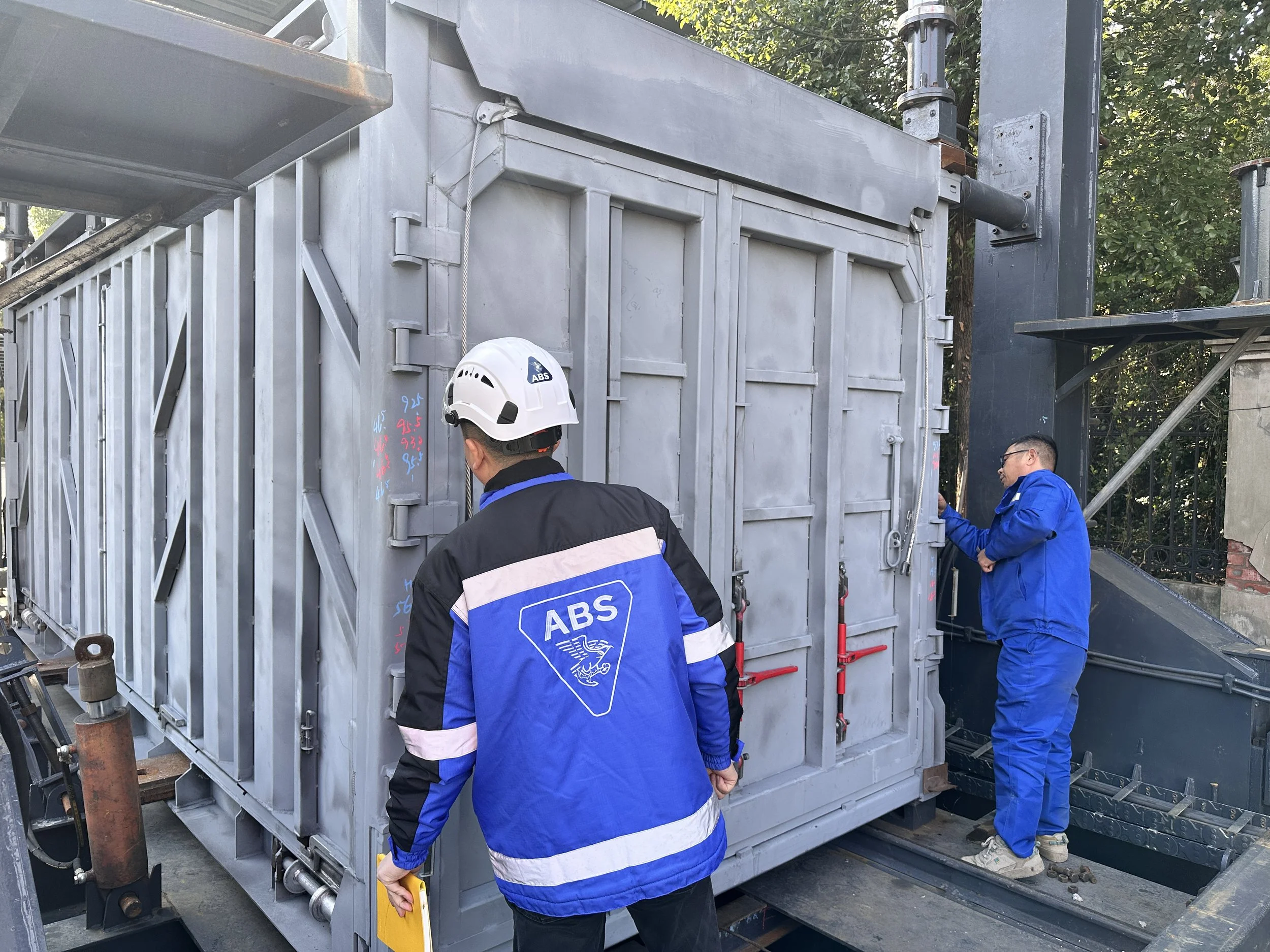
ABS performs ISO tests to our 20ft foldabe bulk container.
When we submitted the first drawings for a foldable 40HC shipping container to a class society, we already knew the structural requirements. ISO 1496 is not ambiguous. Stacking loads, racking forces, end wall loads, floor and roof loads - the test cases are defined, and the pass/fail criteria are specific. What the standard does not tell you is how a class society will interpret a design it has never seen before, what additional calculations it will ask for, and where a reviewer will find a structural argument unconvincing even when the numbers are correct.
That gap between knowing the standard and knowing how to get a novel design through it is where the real difficulty lies.
We have been working in that gap since 2010. Over fifteen years, across multiple foldable container types - shipping containers, rail units, storage containers, foldable platforms, bulk containers - we have run the certification process more times than any other company in this field. Each time, the formal sequence was the same: submit drawings, obtain approval, execute the test procedure. What that sequence actually contained was different every time.
The tests are designed to find something specific
ISO 1496 is not a bureaucratic checklist. Every test case was designed to reveal a specific structural behaviour. The stacking test - which loads a container to the equivalent of nine fully laden units above it, transmitted through the four corner castings only - is probing the load path through the structure. It is asking: does load travel where the designer intended, or does it route through a component that was not designed to carry it?
For a standard container, that question has a known answer. The structure is fixed steel. The load path is short and direct. For a foldable container, the same question opens differently. Every hinge point, every locking mechanism, every panel connection is a place where load could deviate. If it deviates under the stacking test, the container fails. If it deviates slightly but not enough to fail the test, it will develop problems in service.
Understanding this is the difference between designing to pass a test and designing a container that will perform reliably across its service life. We design for the second. That means working through the load path analysis before a prototype is built, identifying where the folding mechanism interacts with the structural load cases, and resolving those interactions at the drawing stage rather than at the test stage.
When there is no precedent
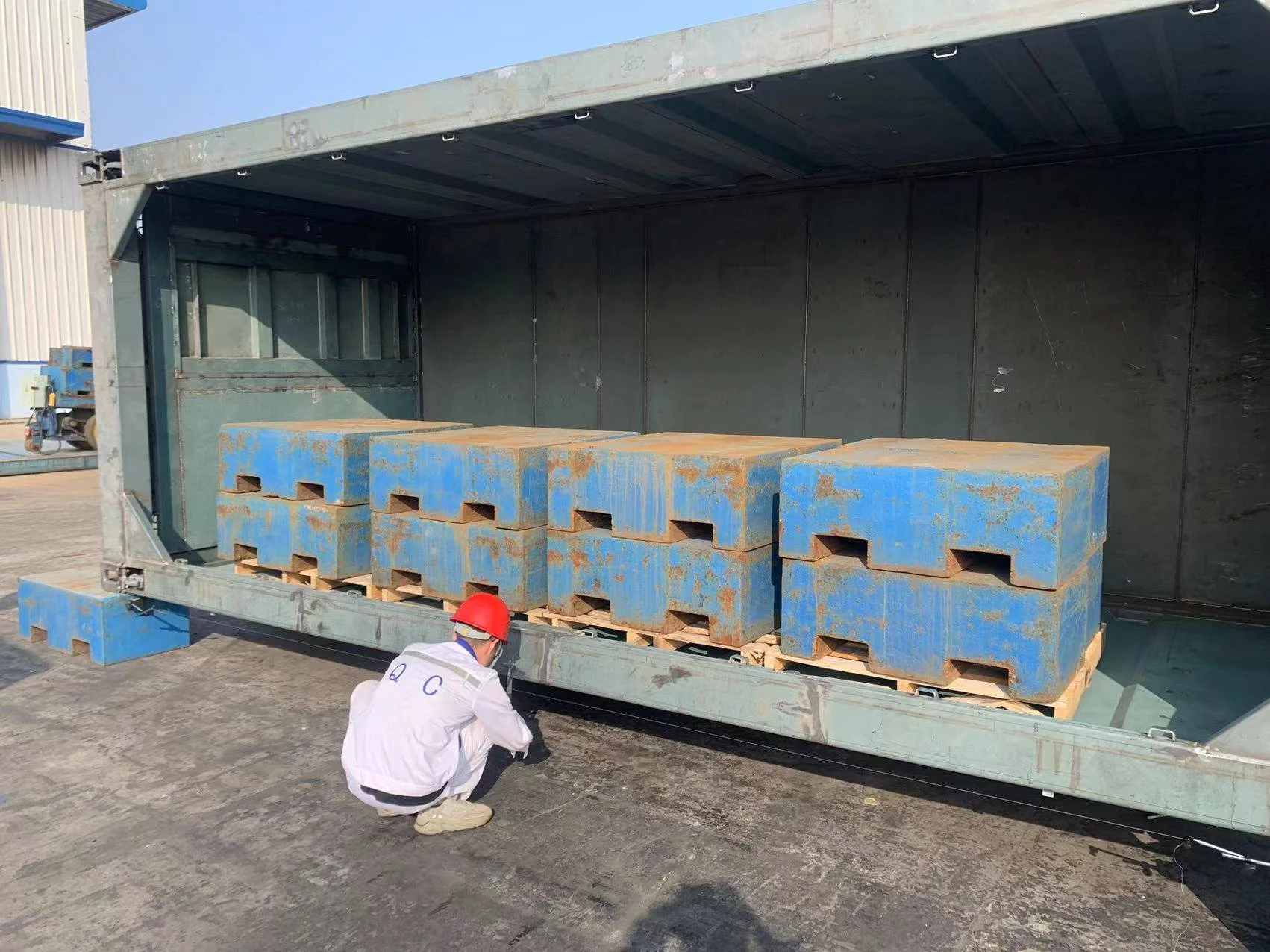
Sidewall testing for 20ft foldable open top
The ISO standard was written for container types that existed when it was written. A genuinely novel container type - one that uses a configuration the standard did not anticipate - requires a different kind of engagement with the certifying body.
We have been in that position more than once. The process is not to find a workaround. It is to construct a precise load case analysis from the underlying intent of the standard, present it to the class society in a way that makes the structural argument clear, and demonstrate through calculation and test that the novel design satisfies every requirement the standard is designed to enforce - even where the standard's explicit guidance does not fully apply.
Recognized class societies including ABS and Lloyd's Register have approved our designs through that process. That outcome is not automatic. It depends on the quality of the engineering documentation, the rigor of the calculation package, and the ability to answer technical questions that no previous applicant has had to answer. We have built that capability iteratively; across every certification procedure we have run.
When the documentation has to do more than certify
Certification results in a certificate. It also produces something less visible but equally important: a precise record of what the container has been tested to withstand, under which conditions, witnessed by which body, and approved to which standard.
That documentation became operationally critical at a US terminal during the first commercial deployment of a foldable container bundle. A prior incident at the terminal - a bundle of flatracks that had dropped from a crane - had created serious risk aversion among terminal operators and unions. Before our bundle would be lifted, the terminal needed two things answered. First: was this unit structurally safe to lift as a bundle? Second: if something went wrong, who was liable?
Neither question could be answered by pointing to the certificate alone. The terminal needed to understand exactly what had been tested, how the bundle configuration had been approved, and what the documentation said about the structural integrity of the unit under crane handling. The carrier was willing to accept liability - and the insurer was willing to cover - only on the basis of the full certification documentation we were able to supply. Without that documentation, the lift would not have happened. The commercial operation would have stopped at the first terminal.
That is what it means for a certification procedure to be done properly. The certificate is the output. The documentation is the foundation that everything operational is built on.
What this means in practice
The engineers who ran those certification procedures are the same engineers who assess new applications, review designs, and advise on deployment today. The knowledge that made it possible to certify novel container types - understanding what each test is designed to find, how to construct a structural argument for a configuration the standard did not anticipate, and what the documentation needs to contain to be operationally useful - is the same knowledge that makes our assessments reliable.
We did not accumulate that knowledge by studying the standard. We accumulated it by running the process, repeatedly, on designs that had never been certified before, and learning at every stage what the framework actually requires and why.
That is the foundation every project we take on is built from.